What Really Matters When Buying Your First Telescope
A telescope is one of the most rewarding purchases an amateur astronomer can make — but walk into a shop unprepared and it's easy to end up with an overpriced disappointment. Here's what actually matters.
$250Decent entry-level scope
$400Strong first buy
apertureThe spec that counts most
The Specs That Actually Count
- Aperture over magnification. Mirror (or lens) diameter determines how much light your scope collects — that's what reveals faint detail. Magnification is secondary; pushing it too high spreads light across a wider area, producing a dimmer, blurrier image. High-magnification claims on the box are a marketing trick.
- Low power has its place. Star clusters and large nebulae often look better at lower magnification, where their full spread fits in the field of view.
- Portability is a real constraint. A huge instrument that's a pain to carry will stay in the closet. If you plan to chase dark skies away from home — and you will — choose a scope you can actually load into a car without drama.
The Gear Around the Scope
- Take the tripod seriously. Many beginner scopes ship with wobbly mounts that shake in the lightest breeze, ruining the view and risking damage. A solid, stable mount is non-negotiable.
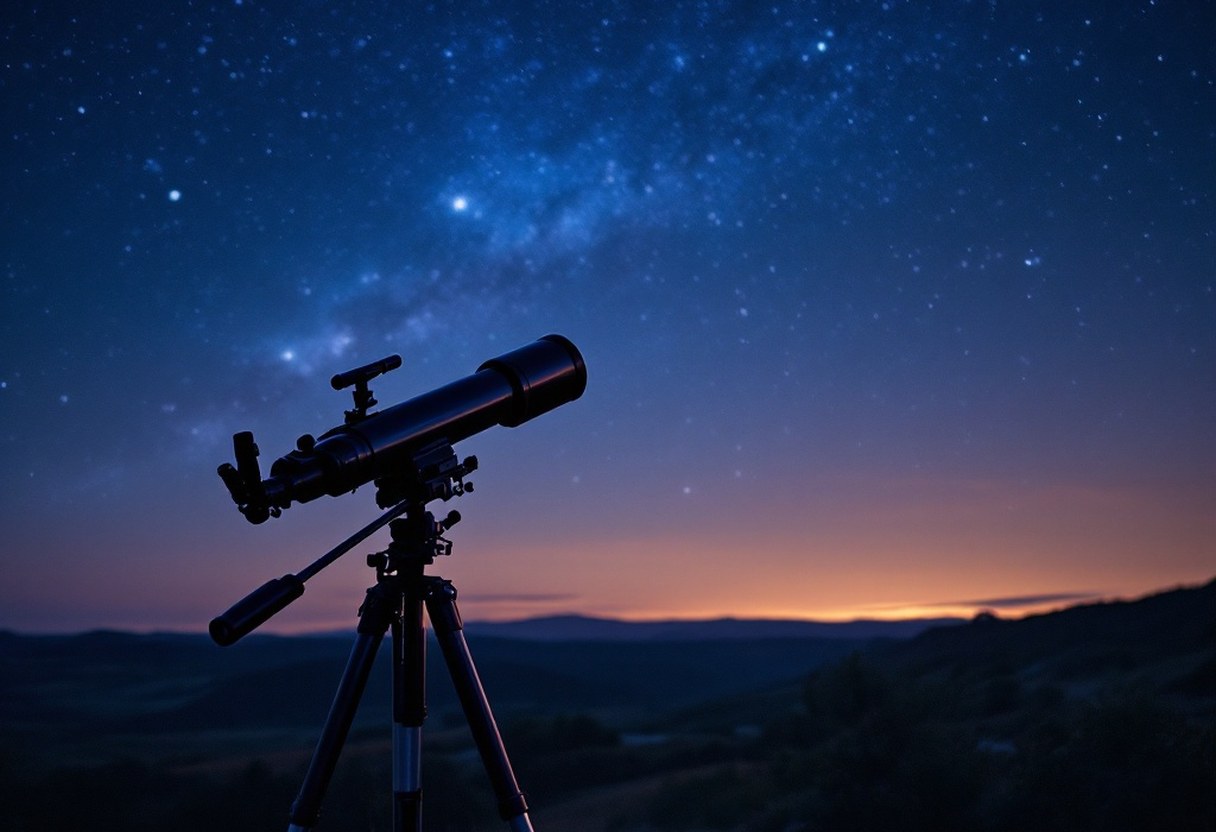
- Check the finder scope. This small auxiliary sight mounted on the tube is how you actually point at objects in the dark. Avoid overly complex finders that are difficult to align — a simple, reliable one beats a fancy frustrating one every time.
Bottom line: If your budget is under $250, it's genuinely worth saving a little longer. A good scope in the $250–$400 range will outperform a cheap impulse buy and keep you hooked on the hobby.
"The best telescope is the one you'll actually use — and carry."