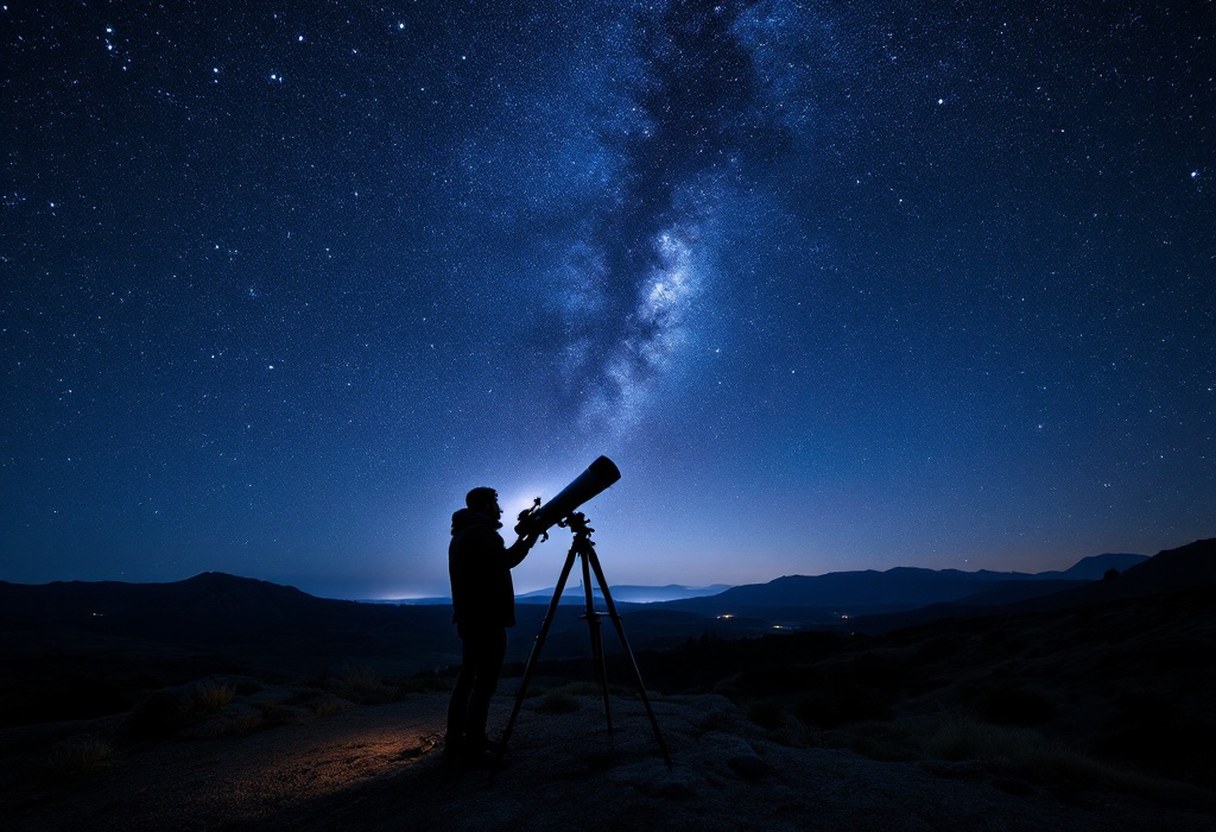
Astronomy grabbed me early and never let go. Yes, the gear is expensive, the weather is unreliable, and clear skies feel perpetually rationed — I went in with eyes open. What keeps me coming back is simple: every session reveals something that stops you cold. Planets, nebulae, globular clusters, the slow sweep of a comet — there is always more sky than time.
Before I ever bought a telescope I sat down with books, magazines, and websites and built a foundation. That deliberate start shaped everything that followed, and it's the approach I advocate to anyone just beginning.
The eyepiece is just the beginning — the reading you do away from the telescope is what makes the view meaningful.
The resources that shaped me
A handful of sources have genuinely moved the needle for me:
- Books — The Backyard Astronomer's Guide by Dickinson and Dyer, A Self-Teaching Guide by Dinah Moche, and A Field Guide to the Stars and Planets by Tirion and Pasachoff gave me solid grounding in history, planetary science, and deep-sky objects. Good bookshops and local libraries still carry treasures worth hunting down.
- Magazines — Sky & Telescope and Astronomy Now keep me current on discoveries, software, and observing techniques. Night Sky magazine was the spark that first fired my curiosity as a beginner.
- Online — NASA ↗'s Astronomy Picture of the Day is a daily ritual; the Astronomical League ↗ and the Society for Popular Astronomy ↗ are invaluable for community and up-to-date sky guidance.
- Documentaries & films — Space documentaries routinely take me to regions of the cosmos no backyard telescope can reach, and they consistently reignite the drive to get outside and observe.
This site is where I bring everything together — observations, equipment notes, and honest beginner advice. Pull up a chair, and let's look up.