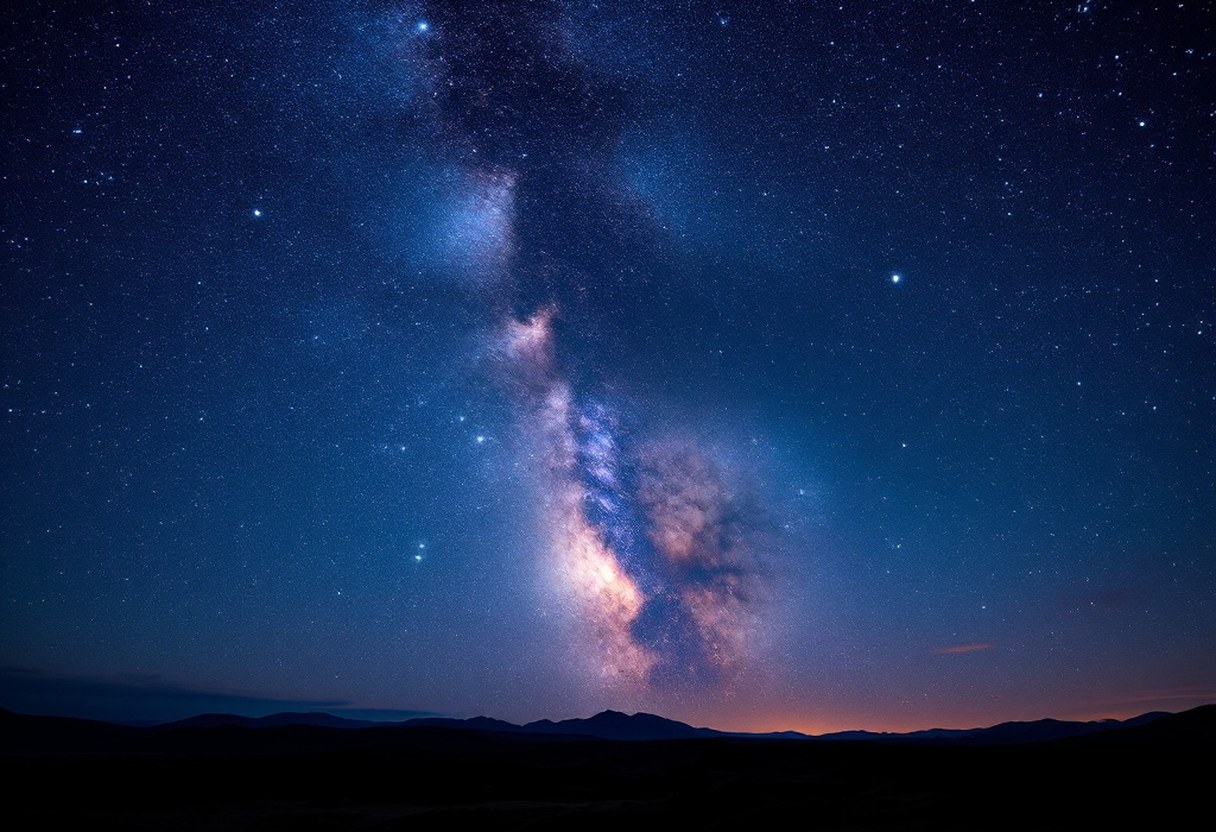
Find Your Dark Sky Location
Ben Canales, a night-sky photographer based in Oregon, built his practice around one simple principle: get away from city glow. Light pollution is the single biggest obstacle standing between your camera and the stars.
Aim for at least 50 miles from any major urban area. Once you're out there, anchor your composition to a strong foreground element — a mountain silhouette on the horizon, a lake that mirrors the stars, or a weathered barn that gives the scene human scale. A compelling foreground transforms a photo of the sky into a genuine landscape.
Balance Light: Foreground vs. Sky

Start with a fully dark frame, then introduce light deliberately. On moonless nights, stars alone provide limited ambient light, so a small LED can subtly lift the foreground without washing out the sky. Shoot plenty of frames at different light levels — you'll be grateful for the options when you sit down to edit.
Work With the Moon, Not Against It
Moonlight is a double-edged sword. A bright moon illuminates your landscape beautifully but overpowers faint stars. A new moon gives you the darkest possible sky but leaves your foreground in deep shadow.
Know the moon's rise and set times before you head out — they're the single most useful piece of planning information you have. Shoot during the window after the moon sets (or before it rises) on nights close to a new moon, and you'll get both a dark sky and enough ambient light to keep your foreground from disappearing into black.