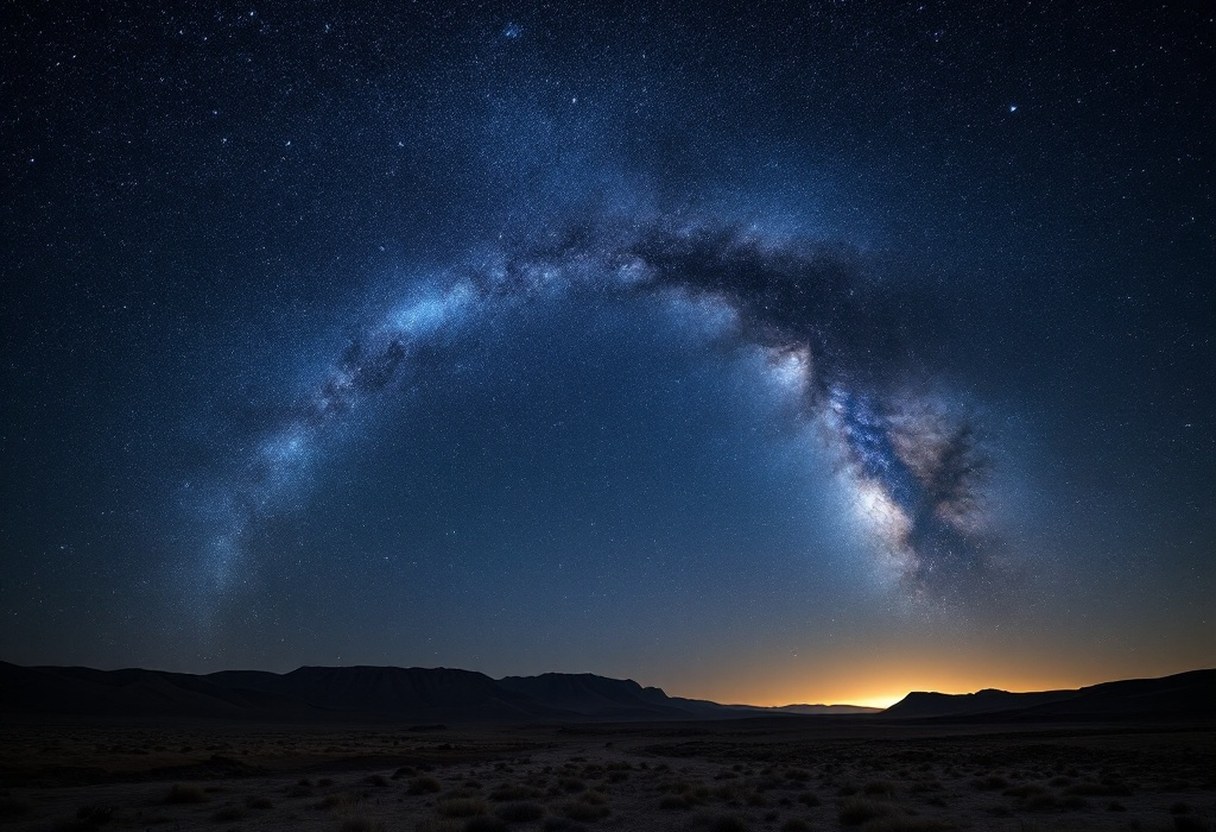
Just unboxed your first telescope? That rush of excitement is universal among stargazers. The good news: the sky rewards beginners immediately. These three targets are bright, rewarding, and visible with almost any optics — binoculars included.
The Moon
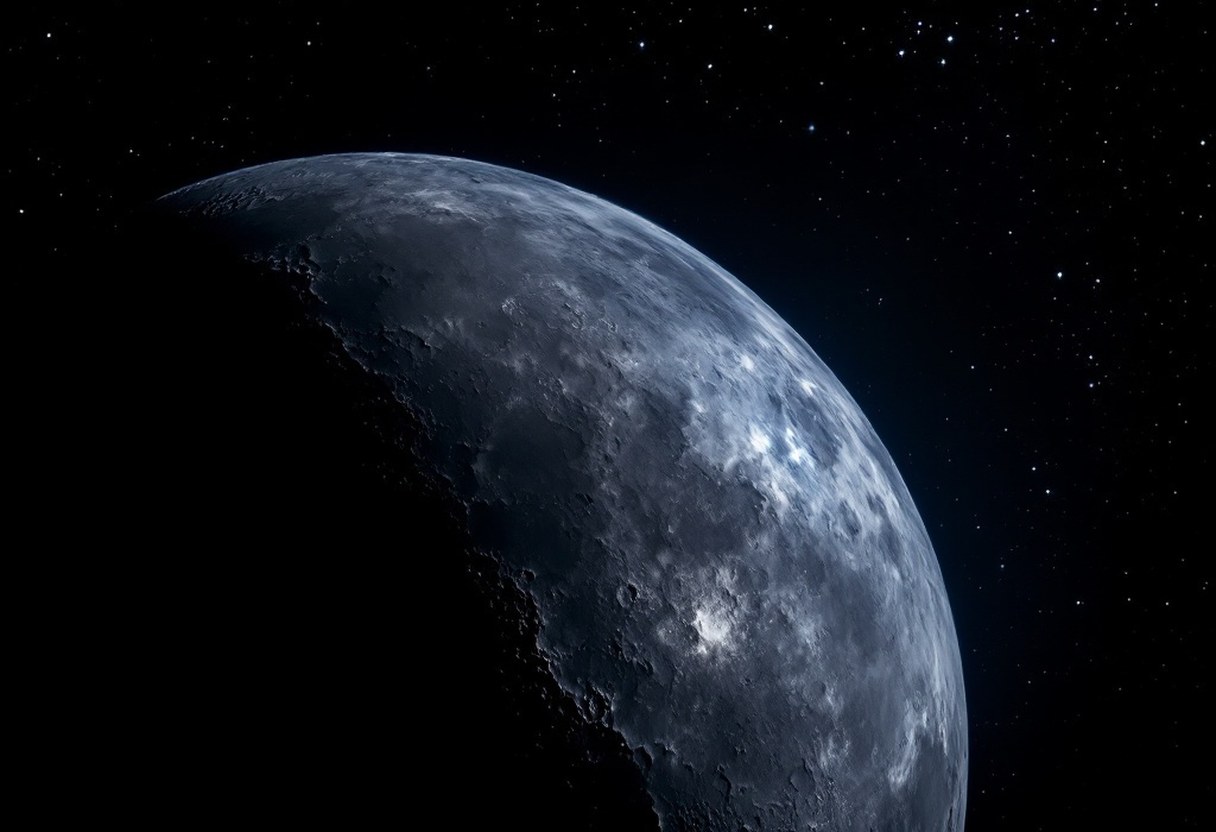
Most beginners wait for a full Moon — but the real show happens at the quarter phase or slightly before. With sunlight striking at a low angle, craters and mountain ranges throw long, dramatic shadows that give the surface genuine three-dimensional depth. The key feature to hunt is the terminator: the curved boundary between lunar day and night. Everything along that line pops.
Jupiter
Jupiter is the largest planet in the solar system, and even the smallest telescope reveals its four Galilean moons — Io, Europa, Ganymede, and Callisto — lined up like tiny beads on either side of the planet. Watch them on consecutive nights and you'll see them visibly shift position. Larger scopes will show cloud bands, and under steady skies the famous Great Red Spot becomes visible too.
Saturn
Saturn sits roughly twice as far from the Sun as Jupiter, so it appears noticeably fainter — but its rings make it the single most jaw-dropping sight in any beginner's eyepiece. Resist the urge to crank up the magnification; 100–150× is the sweet spot. Push beyond that and atmospheric turbulence turns the image to mush.
Under poor seeing, or with very modest optics, the rings shrink to what look like small "ears" on either side of the disk. That's exactly what Galileo saw in the early 1600s — he thought they were two companion moons. When the ring plane tilted edge-on toward Earth a couple of years later, they seemingly vanished, baffling him completely. Now you know the answer he never quite worked out.