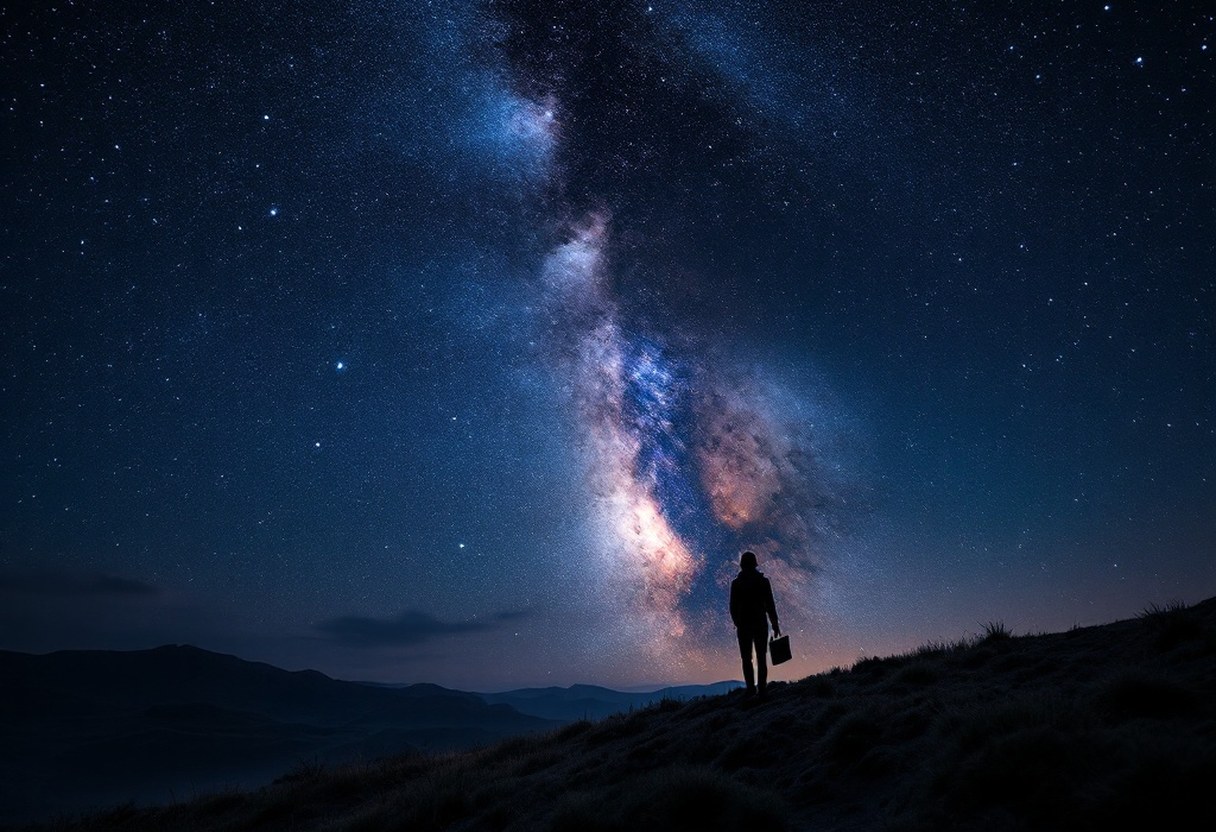
What Makes the Milky Way So Irresistible to Photograph
Some subjects stop you in your tracks the moment you frame them through a lens. The Milky Way is one of them — and the experience of capturing it on camera goes far beyond anything you can fully describe in words. There is something quietly humbling about pointing your camera at a river of light whose individual stars are billions of years old, spread across distances so vast that the numbers barely register. Yet through the sharp eye of a well-chosen lens, those objects feel achingly close.
Night-sky photography sits at a rare intersection of art and science. Professional and amateur astronomers have long shared breathtaking images that expand our collective sense of wonder, but the good news is that you don't need a research-grade observatory to join them. Modern digital cameras have handed ordinary people the technical ability to reach into the universe from their own backyard. And the single most accessible, most jaw-dropping target available to any beginner or seasoned shooter is our own galaxy — the Milky Way.
A Galaxy That Defies the Flat-Disc Cliché
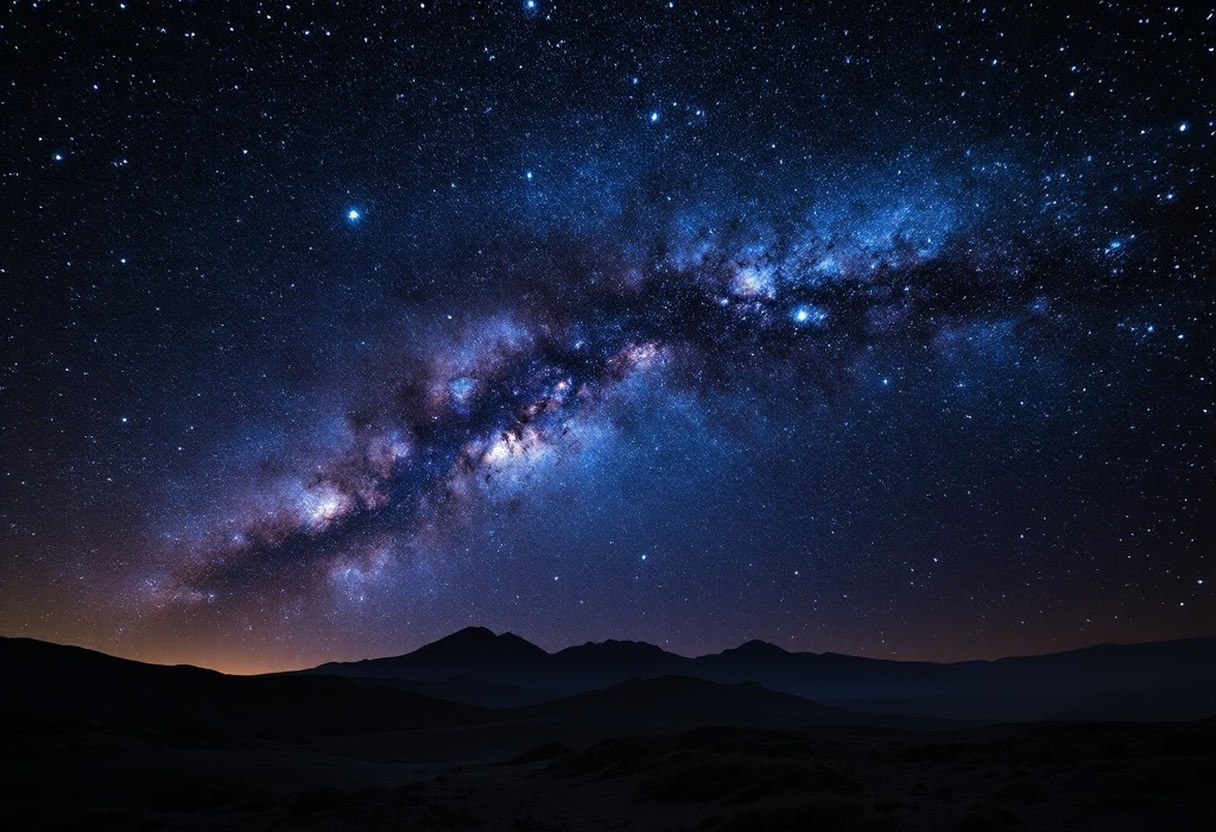
Most people picture the Milky Way as a perfectly flat, spinning dinner plate. The reality is far more interesting — and far more photogenic. Our galaxy is actually warped, bending gently out of a true flat plane in a shape that astronomers have spent decades mapping. The culprits responsible for this warp are our two nearest galactic neighbours: the Large and Small Magellanic Clouds. These dwarf galaxies orbit the Milky Way as part of our local group, and their gravitational influence tugs on the dark matter distribution within our galaxy, distorting the outer disc in a slow-motion cosmic tug-of-war.
For photographers, this subtlety is part of the story. When you shoot a wide panorama of the galactic plane, you're not just capturing a band of stars — you're framing a gravitationally sculpted structure shaped by billions of years of interaction with neighbouring galaxies. That context transforms a beautiful exposure into something genuinely profound.
The Hidden Halo: Dark Matter and What Your Camera Can't Capture
Here's a fact that should fire up your curiosity every time you set up a tripod under a dark sky: scientists broadly agree that over 90% of our galaxy's mass is dark matter — an invisible, enigmatic substance that emits no light and interacts with ordinary matter only through gravity. The luminous stars, nebulae, and dust lanes that make Milky Way photography so spectacular account for less than 10% of the galaxy's actual mass.
This invisible component forms what cosmologists call a dark matter halo — a vast, roughly spherical envelope surrounding the visible disc. It's nothing like the radiant halo of classical imagery; you cannot see it, and your camera cannot record it. Yet it's there, and it governs the rotational dynamics of everything you can photograph. For anyone wanting to explore what simulations of this dark matter distribution look like, the Via Lactea Project offers some of the most detailed computational models available.
Stellar Speed and the Physics Behind the Shot
Another dimension that makes Milky Way photography endlessly fascinating is the sheer velocity at which everything is moving. The stars you see are not stationary — they're racing around the galactic centre at extraordinary speeds, and the overall rotation rate of the galaxy is tied directly to its total mass. Intriguingly, the disc rotates far faster than the visible matter alone could explain; it's the gravitational influence of all that dark matter filling the halo that keeps everything spinning at the rates we observe.
On a practical level, tracking mounts matter for long-exposure astrophotography for a simpler reason: the Earth itself is rotating, which means your target is always drifting across the frame. Understanding the physics of galactic rotation adds a satisfying layer of depth to an already absorbing technical challenge.
Why Photography Is the Perfect Gateway Into This World
The act of photographing the Milky Way does something that purely visual observation cannot always match: it reveals structure your naked eye misses entirely. Long exposures accumulate photons from faint nebulae, dust lanes, and star clusters that sit below the threshold of human night vision. A single well-executed shot can show you more of our galaxy's architecture than hours of unaided stargazing.
- Accessibility: Any modern DSLR or mirrorless camera — even many capable smartphone cameras — can record the Milky Way from a dark-sky site.
- Repeatability: Unlike many astronomical events, the core of the Milky Way returns to prominence reliably each year, giving you regular opportunities to refine your technique.
- Creative depth: Foreground composition — silhouetted trees, rock formations, water reflections — transforms astrophotography into landscape art.
- Scientific value: Citizen science programmes actively welcome high-quality imagery from amateur photographers to supplement professional observation data.
- Community: Astrophotography has one of the most generous, collaborative communities in all of photography, with knowledge shared freely across forums, social channels, and local astronomy clubs.
Our Place in the Picture
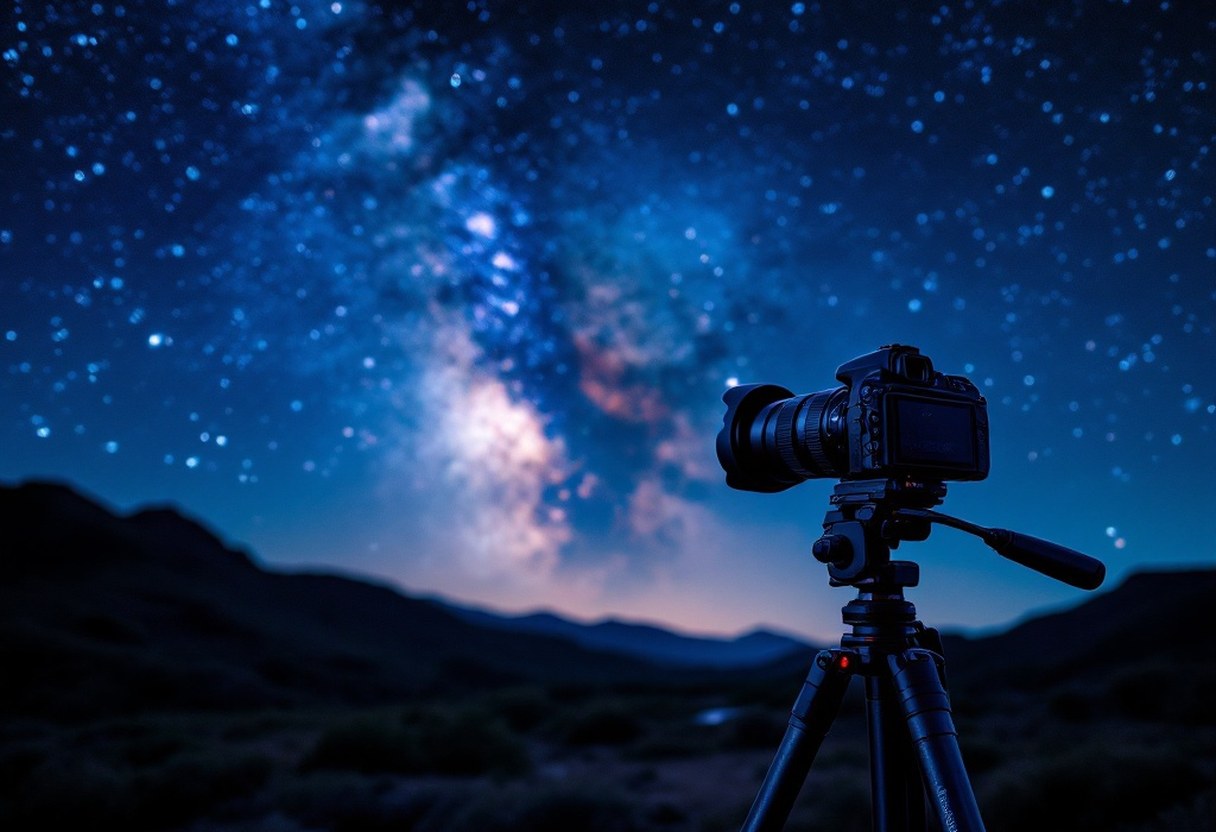
Perhaps the most compelling reason to photograph the Milky Way is the perspective it offers. Our Solar System sits roughly 27,500 light years from the Galactic Center, tucked into the inner edge of the Orion Arm — one of the galaxy's prominent spiral features. When you photograph that broad arc of light crossing the sky, you are quite literally looking along the plane of the structure you inhabit. You are inside the photograph.
That realisation — that the camera and the subject share the same cosmic address — is the kind of thing that keeps astrophotographers returning to dark fields night after night, regardless of the cold, the dew, or the early alarm clock. The Milky Way is not just a photographic subject. It's home, and it happens to be extraordinarily beautiful.