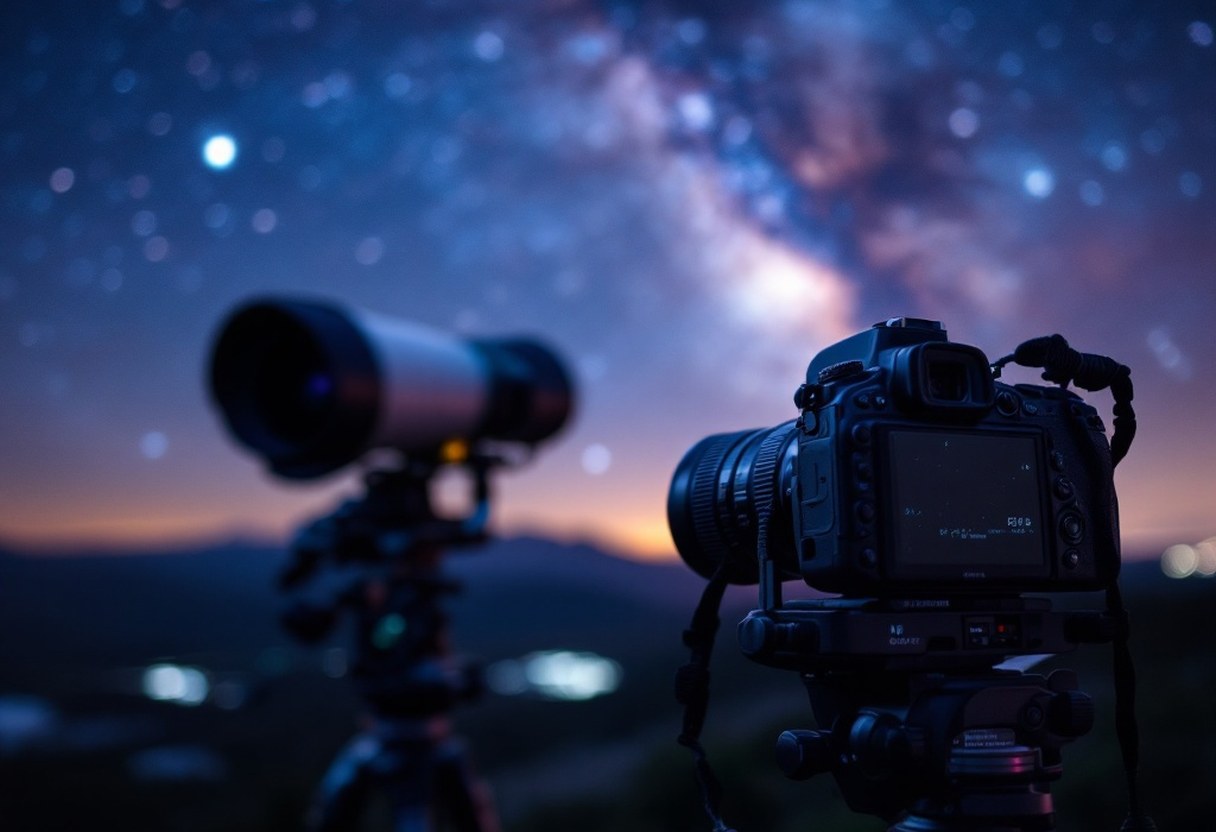
Three Cameras Worth Taking Into the Dark
Night sky photography demands a lot from your gear — high resolution, excellent low-light performance, and reliable autofocus when targets are faint and fleeting. These three cameras have earned genuine reputations among astrophotographers. Here's what makes each one worth considering.
The Cameras
Fujifilm X-T2 — Mirrorless Precision
The X-T2 is a mirrorless body built around a 24.3MP APS-C sensor and the Fuji X Mount system. Its headline upgrade over its predecessor is a dramatically improved autofocus system — fast and accurate enough to track objects that refuse to stay still. An 8fps continuous shooting speed and a bright EVF make it a capable, compact companion under dark skies.
Canon EOS 5D Mark IV — Full-Frame Workhorse
The 5D Mark IV is a full-frame CMOS DSLR with a 30.4MP sensor, Canon EF mount, optical viewfinder, and a 3.2-inch touchscreen. Its larger sensor gathers more light per pixel, which pays real dividends on long exposures of nebulae and star fields. Sharp, clean images at high ISO are its signature strength.
Nikon D500 — Speed and Durability
The D500 is a rugged APS-C DSLR with a 20.9MP CMOS sensor and a 3.2-inch monitor. Its robust metal body handles cold nights without complaint, and its high-end feature set makes it accessible to photographers still building their astrophotography skills. If you plan to shoot fast-moving events — meteors, satellite passes — its speed-focused design earns its place.